
How to verify
- The dough is semolina and water; potato, mint and garlic are Halal.
- Ask about the rennet in the sheep's cheese.
- Ask whether the filling uses olive oil or lard; on packs, look for 'strutto'.
- Avoid a meat ragù unless the meat is Halal.
Quick checks
- The pasta, potato and mint are Halal.
- Ask whether lard went into the filling, and check the cheese's rennet.
- Ask what sauce they come with: tomato or butter and sage are fine, a meat ragù needs Halal meat.
What decides the answer
-
Filling with olive oil and microbial-rennet cheese
Halal -
Cheese with animal rennet from an animal not slaughtered Islamically
Scholarly difference -
Filling with lard
Haram -
Served with pork ragù
Haram
Why this ruling
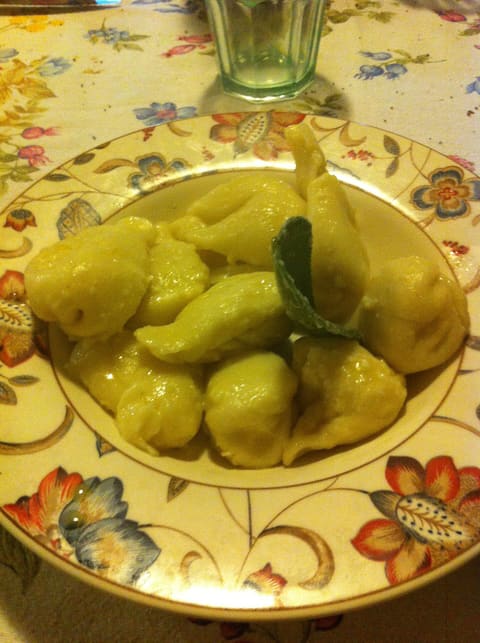
Culurgiones are the filled pasta of Ogliastra, on Sardinia's east coast: soft parcels of semolina dough around a filling of mashed potato, sheep's cheese, fresh mint, garlic and olive oil, each one sealed with a row of tiny pinches that looks like an ear of wheat.[4] The pleat is hard to learn and every family is proud of theirs; the dumplings were once made to mark the end of the grain harvest and for the Day of the Dead. Since 2015, Culurgionis d'Ogliastra has been a protected name in the EU.
What decides it
| Part | Usually | Halal? |
|---|---|---|
| Dough | Durum wheat semolina, water, sometimes flour | Yes |
| Potato, mint, garlic, onion, olive oil | Plant | Yes |
| Cheese in the filling | Pecorino, fresh or aged sheep's cheese | Depends on the rennet |
| Fat in the filling, in some recipes | Olive oil, or a little lard or animal fat | Oil, yes; lard, no |
| Sauce | Tomato and basil, or butter and sage | Yes |
| Meat ragù, in some restaurants | Pork, beef or lamb | Pork, no; others only from Halal slaughter |
Potato and mint are Halal, so the checks are the cheese, the fat and the sauce. Sardinian sheep's cheeses are traditionally set with animal rennet. Rennet is Halal when it is microbial or from an animal slaughtered Islamically, not Halal when it is from pork, and a point of scholarly difference when it is from a lamb or calf not slaughtered Islamically: Hanafi scholars at SeekersGuidance treat non-pork animal rennet as generally permissible,[2] and Askimam sets out the conditions,[3] while other scholars do not accept it. Some family recipes add a spoon of lard to the filling for richness, and a few restaurants serve culurgiones with a pork ragù.[1]
Ordering and buying
Ask what fat went into the filling and what cheese, and order them with tomato sauce or butter and sage rather than a meat ragù. Fresh and frozen culurgiones sold outside Sardinia list the cheese and fat on the label; look for "lard" or "strutto", and for the rennet if the label says.
For other Sardinian food, see malloreddus, seadas, pane carasau and the Sardinia guide; for rennet in general, cheese.
Where you'll find it
- Sardinian trattorie
- Festival and family pasta courses
Frequently asked questions
Are culurgiones Halal?
What is inside culurgiones?
What is the pleat on culurgiones?
Scholarly view
Pasta, potato and mint are Halal; lard and pork ragù are Haram. Cheese rennet: microbial or from a Halal-slaughtered animal is Halal, pork rennet is not, and rennet from a lamb or calf not slaughtered Islamically is a point of scholarly difference.
Sources
Named Islamic, certifier, manufacturer, and regulatory sources used on this page. Inline markers like [1] jump here. Retrieval dates show when we last checked the live URL. Editorial methodology.
Islamic / scriptural
-
-
SeekersGuidance — is rennet in cheese Halal?
SeekersGuidance Retrieved
Hanafi: non-porcine animal rennet generally permissible; other schools differ. Prefer known source.
-
Askimam 965 — rennet from non-zabiha vs porcine sources
Askimam Retrieved
Named Hanafi discussion of slaughter vs porcine enzymes—applies to pecorino in the filling.
Context / background
People also check
Related ingredients and products for this item.
Browse this topic
Open the parent category hub for more foods in the same group.