Are Pastéis de Nata Halal?
Yes — this one is Halal.
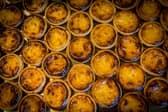
Pastéis de nata are Portuguese custard tarts: egg yolks, milk or cream, sugar and flour in a crisp laminated pastry, with lemon and cinnamon.
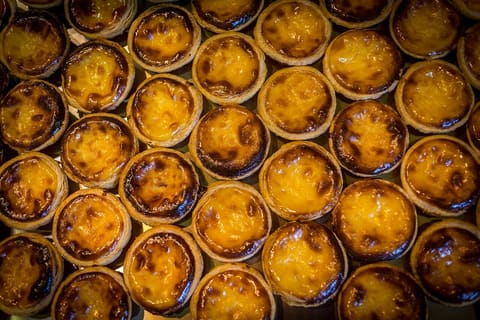
Photo: Photo Claude TRUONG-NGOC · CC BY-SA 3.0
What decides the answer
-
Pastry made with butter or margarine
Halal -
Hong Kong-style egg tarts
ask about lard in the crust -
Pastry made with lard
Haram
Why this ruling
Pastéis de nata are Portugal's custard tarts: a crisp spiral of laminated pastry filled with egg-yolk custard and baked hot enough to blister the top. The filling is egg yolks, milk or cream, sugar and a little flour, flavoured with lemon peel and cinnamon. There is no meat, no gelatin and no alcohol in the recipe, so they are Halal.[3][1]
Where they come from
The tarts began in the Jerónimos Monastery in Belém, on the edge of Lisbon. Convents used egg whites to starch clothes and turned the leftover yolks into sweets. When the monasteries closed in the 1830s, the recipe passed to a nearby sugar refinery, and the shop there still sells them as pastéis de Belém. Everywhere else they are pastéis de nata. A single one is a pastel de nata.
The one thing to check
The only ingredient that could change the answer is the fat in the pastry.[2] Portuguese bakeries and supermarket versions use butter or margarine, and both are Halal. Laminated pastry can in principle be made with lard, so if you want to be certain, ask; on a pack, the ingredient list will say.
Flavourings do not change it. Some recipes add vanilla, and vanilla extract is covered on its own page: see vanilla extract.
Hong Kong and Macau egg tarts
Egg tarts in Hong Kong are a different recipe. Their custard is smoother and yellower, and the crust, either shortcrust or a flaky pastry, is traditionally made with lard. Macau's version is close to the Portuguese one, and the Portuguese-style tarts sold by chains across Asia follow that model, but the pastry fat varies by bakery. For any egg tart outside Portugal, ask what is in the crust.
Buying them abroad
In Portugal, in Portuguese bakeries elsewhere and in European supermarkets, the ingredient list is short: flour, butter or margarine, sugar, egg yolk, milk, starch. A vegetarian mark settles the pastry fat. For other breakfast pastries, see croissants, and for the custard's main ingredient, eggs.
How to verify
- Ask the bakery which fat is in the pastry: butter and margarine are fine.
- On packs, read the ingredient list for lard or pork fat.
- Flavourings such as vanilla are usually fine; see the vanilla page if a label names vanilla extract.
Quick checks
- The custard is egg yolk, milk, sugar, flour, lemon and cinnamon: Halal.
- Ask whether the pastry is made with butter, margarine or lard.
- Hong Kong egg tarts often use lard pastry; ask separately.
Frequently asked questions
Are pastéis de nata Halal?
Do pastéis de nata contain gelatin?
Are supermarket custard tarts Halal?
Are Hong Kong egg tarts the same?
Scholarly view
Egg, milk, sugar and flour are Halal. The ruling only changes if the pastry is made with lard, which is pork fat.
Sources
Named Islamic, certifier, manufacturer, and regulatory sources used on this page. Inline markers like [1] jump here. Retrieval dates show when we last checked the live URL. Editorial methodology.
Islamic / scriptural
Context / background
-
Wikipedia Retrieved
Culinary identity: Portuguese egg custard tart pastry, optionally dusted with cinnamon. Identity context, not a Halal certificate.
-
Browse this topic
Open the parent category hub for more foods in the same group.