
What decides the answer
-
Standard white chocolate (cocoa butter, milk, sugar)
Halal baseline -
Filled or coated novelties
separate check -
Alcohol-filled truffles
avoid -
Verify emulsifiers on budget or unfamiliar brands
Where you'll find it
- White chocolate bars and chips
- Baking and ganache
- Coatings and decorations
- Flavoured white chocolate novelties
Why this ruling
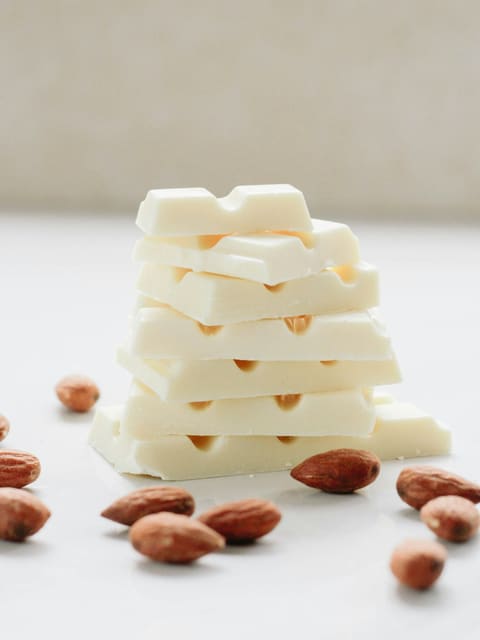
White chocolate is a confection of cocoa butter, sugar, and milk solids—ivory in colour because it lacks the brown cocoa solids of milk or dark chocolate. For Halal purposes the base recipe is straightforward: dairy plus plant fat from cacao. Additives and filled novelties create the edge cases.
On the shelf
Cadbury's Creamy White Chocolate in the UK lists "Sugar, cocoa butter, skimmed milk powder, whey powder (milk), milk fat, emulsifier (soya lecithins), flavouring" and is labelled vegetarian.[5] Asda's white chocolate is labelled vegetarian too, with soya lecithin and vanilla extract.[6] Lindt's Swiss white chocolate in the US uses soy lecithin and vanillin, a synthetic flavour.[7] So the base raises no question; the two things worth a look are whey, which comes from cheese-making (see whey powder), and vanilla extract, which is made with alcohol (see vanilla extract).
Standards vs Halal
In the United States, FDA identity standards require white chocolate to meet minimum cocoa butter and milk-solid levels and maximum sugar (FDA identity standards, retrieved 20 July 2026; see also chocolate standards discussions on fda.gov, retrieved 20 July 2026). Those rules protect naming; they do not issue Halal certificates. EU and other markets have parallel composition rules.
| Form | Typical Halal read |
|---|---|
| Plain white chocolate bar | Halal baseline |
| White chocolate chips (real cocoa butter) | Usually Halal—check lecithin |
| Compound white coating (palm oils) | Usually Halal if oils/emulsifiers clear |
| Liqueur-filled white truffles | Avoid |
| Gelatin-decorated shapes | Verify gelatin source |
Emulsifiers and flavours
Soy lecithin is the common emulsifier and is plant-derived in mainstream chocolate. Ambiguous “emulsifier” lines on discount coatings are why industrial buyers prefer Halal-certified couverture. Vanilla flavour is usually fine; alcohol-based extracts are more common in home recipes than in moulded bars. Strawberry or cookies-and-cream white chocolate may add colours (watch carmine) and cookie bits (see cookies logic).
Brand confectionery pages (for example major chocolate makers linked from nestle.com portfolio information, retrieved 20 July 2026) describe white chocolate products by market—always defer to the bar you hold.
Baking and food service
White chocolate ganache, drizzle, and mold work are Halal when the chocolate is. Problems appear when pastry kitchens add gelatin bloom to glazes or brush liqueur onto white-chocolate entremets. School and café “white chocolate sauces” sometimes use compound coating plus flavour syrups—ask for the ingredient sheet in catering contexts.
Halal-certified white chocolate is widely available in Malaysia, Indonesia, and Gulf import channels. Directory confirmation for Malaysian marks: JAKIM Portal Halal / MYeHALAL (retrieved 20 July 2026).
Compound coatings, candy melts, and “white chocolate” on labels
Not every ivory confection meets legal white-chocolate standards. Candy melts and compound coatings often replace cocoa butter with cheaper vegetable fats. That swap is usually still Halal when oils and emulsifiers are plant-based, but it changes melting behavior and sometimes additive packages. Read the panel rather than trusting the front-of-pack phrase “white chocolate flavoured.”
Ruby-adjacent or coloured white chocolates sold for drip cakes may use carmine or other reds—check E-numbers on professional bakery packs. White chocolate pretzels and popcorn mixes introduce pretzel oils and flavour dusts that are separate from the chocolate ruling. Gift hampers that wrap white chocolate around dried fruit soaked in liquor are alcohol problems even when the chocolate base is fine.
For commercial kitchens serving Muslim customers, Halal-certified white couverture reduces supplier arguments about lecithin origin. For home bakers, a major brand bar with a short ingredient list is usually enough. Keep flavoured seasonal bars (peppermint, eggnog spice, cookie pieces) on a separate mental shelf from plain white chocolate.
Realistic verification
- Is it white chocolate / white coating with clear fats?
- Lecithin/emulsifiers acceptable?
- Any gelatin décor or alcohol filling?
- Need a Halal mark for your use case (factory, catering)?
How to verify
- Confirm the bar is white chocolate (cocoa butter + milk + sugar), not a compound coating only.
- Check lecithin/emulsifiers and flavourings on unfamiliar brands.
- Inspect gelatin decorations or alcohol fillings on novelty shapes.
- Prefer Halal-certified white chocolate when buying industrial coatings.
- Re-check flavoured white chocolate (strawberry, cookies-and-cream) as separate products.
Frequently asked questions
Is white chocolate Halal?
Does white chocolate contain cocoa?
Is lecithin in white chocolate a problem?
Are white chocolate chips for baking Halal?
Where can I verify certified white chocolate?
Scholarly view
White chocolate contains cocoa butter but not cocoa solids—that is a standards definition, not a Halal problem. Milk solids are dairy. The usual mashbooh lines are emulsifiers (lecithin source), E471 in some coatings, gelatin on moulded shapes, and liqueur fillings.
Compound ‘white chips’ made with palm kernel oil instead of cocoa butter follow the same additive logic even if they are not legal ‘white chocolate’ in the U.S.
Sources
Named Islamic, certifier, manufacturer, and regulatory sources used on this page. Inline markers like [1] jump here. Retrieval dates show when we last checked the live URL. Editorial methodology.
Certifier / jurisdiction
-
Retrieved
Manufacturer / product
-
Retrieved
-
Cadbury Creamy White Chocolate, UK (7622210716095)
Open Food Facts (pack record) Retrieved
Record updated March 2026; labelled vegetarian. Ingredients: 'Sugar, cocoa butter, skimmed milk powder, whey powder (milk), milk fat, emulsifier (soya lecithins), flavouring'.
-
Asda white chocolate (5054070674505)
Open Food Facts (pack record) Retrieved
Record updated March 2026; labelled vegetarian. Ingredients include milk powders, whey powder, butterfat, 'Emulsifier (Soya Lecithins), Vanilla Extract'.
-
Lindt Swiss White Chocolate, US (0037466019888)
Open Food Facts (pack record) Retrieved
Record updated February 2026. Ingredients: sugar, cocoa butter, milk, skim milk, 'soy lecithin (emulsifier)' and vanillin, an artificial flavour.
People also check
Related ingredients and products for this item.
Browse this topic
Open the parent category hub for more foods in the same group.